


Most UK businesses spend heavily on acquiring new customers while neglecting the ones they already have. Learning how to improve customer experience is the fastest route to retention, referrals and sustainable growth. This guide covers every strategy that separates businesses clients return to from those they quietly replace. No theory. No filler. Just what actually works.
Customer experience is not a department. It is every interaction a client has with your business from the first touchpoint to the last invoice. Most UK businesses underestimate its commercial value until a competitor with a better experience starts winning their clients.
Research consistently shows that why companies should invest in customer experience goes beyond satisfaction scores. It directly impacts revenue, retention and referral rates. Businesses that prioritise experience outperform those that prioritise acquisition alone.
This guide covers every stage of the customer experience journey. Whether you serve individuals or corporate clients, the principles here apply directly to where your business stands right now.
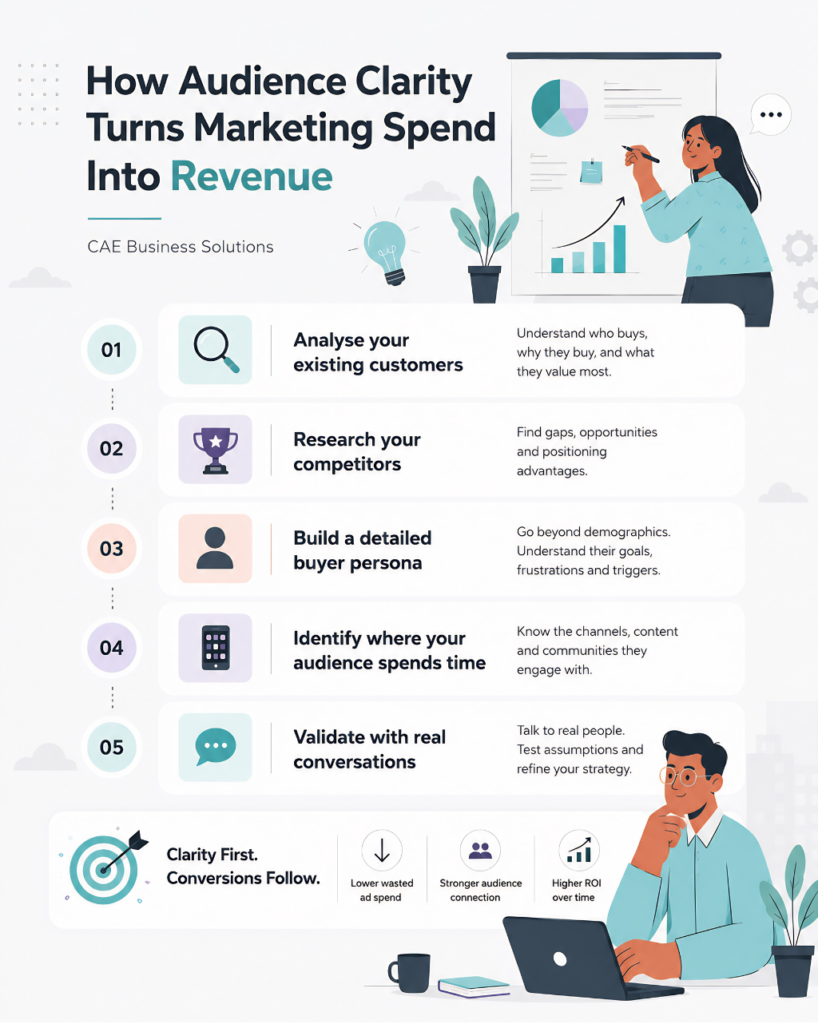
Start With Understanding Your Customer
You cannot improve an experience you do not understand. Most UK businesses assume they know what their customers want. The ones that grow consistently ask, listen and act on what they hear rather than what they assume.
Customer understanding starts with data. Analyse your sales patterns, support queries, cancellation reasons and repeat purchase behaviour. Each data point tells you something about what your customers value and where your experience falls short.
Behavioural insight goes deeper than surveys. Study how clients navigate your website, where they drop off and which pages they return to. Consequently, these patterns reveal friction points that no questionnaire will ever surface.
Understanding your customer is ultimately the foundation of every other strategy in this guide. As we explore in our article on how to build a successful business, businesses that know their audience outperform those that guess at every level of growth.
The Strategy That Turns Clients Into Loyal Advocates
Generic experiences produce generic results. Personalisation tells your client that your business sees them as an individual rather than a transaction. That distinction drives loyalty more effectively than any discount or incentive scheme ever will.
Personalisation covers:
- Addressing clients by name in every communication
- Tailoring recommendations based on past behaviour
- Sending relevant content at the right moment
- Acknowledging milestones such as anniversaries and birthdays
- Customising proposals and quotes to individual needs
- Following up after every project with specific feedback requests
The businesses that personalise most effectively do not rely on memory. Instead, they build systems. A CRM that captures client preferences, purchase history and communication style gives every team member the context to deliver a consistent personalised experience at scale.
Personalisation also extends to how you handle problems. A client who receives a personalised resolution to a complaint becomes a more loyal advocate than one who never had a problem at all. Furthermore, the way your business handles difficulty reveals more about your values than the way it handles success.

How to Improve Customer Experience Through Exceptional Service Standards
Exceptional service is not accidental. It is the result of deliberate standards, consistent training and a culture where every team member understands that the client experience is their responsibility regardless of their role.
Define Your Service Standards in Writing
Set clear, measurable expectations for response times, communication quality and resolution processes. Standards that exist only in the mind of a founder do not scale. Therefore, document them and train every team member against them without exception.
Empower Your Team to Resolve Problems Immediately
Clients who wait for escalation chains lose confidence fast. Give your team the authority to resolve complaints, offer goodwill gestures and make decisions without requiring management approval at every stage.
Train Consistently Not Just at Onboarding
Service quality erodes without reinforcement. Consequently, build regular training into your operations that covers empathy, communication and problem resolution. The businesses that deliver consistently excellent service treat training as ongoing infrastructure rather than a one time event.
Hire for Attitude and Train for Skill
The foundation of exceptional service is the right people. As our guide on building a winning team highlights, hiring individuals who genuinely care about the people they serve produces service outcomes that no training programme alone can manufacture.
Streamline Every Stage of the Customer Journey
A remarkable product delivered through a frustrating process still produces a poor customer experience. The journey matters as much as the destination. Every unnecessary step, unclear communication and unexplained delay erodes the confidence your client placed in your business when they chose you.
Journey mapping is the process of documenting every touchpoint a client encounters from initial enquiry to post delivery follow up. Done honestly, it reveals friction points that your team has become blind to through familiarity.
Review each stage with one question in mind. Is this step as easy as it could be for the client? Consequently, simplify your onboarding process, clarify your communication at every stage and eliminate any touchpoint that exists for your convenience rather than theirs.
Consistency across channels matters equally. A client who receives a fast response by email but waits three days for a phone call back experiences two different businesses. Therefore, align your response standards, tone and quality across every channel without exception.
How to Improve Customer Experience Using Feedback and Data
Feedback is the fastest route to improvement. However, most businesses collect it inconsistently, analyse it poorly and act on it rarely. That gap between gathering feedback and acting on it is where client trust quietly erodes.
Build feedback collection into every stage of the client journey. Post project surveys, follow up calls and Net Promoter Score measurements give you structured data to work with. According to customer experience trends in 2026, businesses that close the feedback loop consistently retain significantly more clients than those that treat feedback as optional.
Negative feedback is more valuable than positive feedback. A client who tells you what went wrong gives you the exact information needed to prevent the same experience from repeating. Thank them directly, act visibly and follow up to confirm the improvement was made.
Data without action is noise. Therefore, assign ownership of feedback analysis to a specific person in your business and build a monthly review process that translates client insight into concrete operational changes.
Surprise, Delight and Build a Customer Community That Stays
Retention compounds when clients feel they belong to something rather than simply purchasing from someone. The businesses with the lowest churn rates do not just deliver good service. They build environments where clients feel valued, connected and invested in the relationship.
Surprise and delight does not require significant budget. A handwritten note after a major project, an unexpected upgrade, early access to a new service or a personal check in call creates a disproportionate impact on how clients perceive your business.
Community building extends that feeling of belonging beyond individual transactions. Online groups, client events, exclusive content and loyalty programmes give clients reasons to stay engaged between purchases. Furthermore, these touchpoints generate organic referrals that no advertising budget can replicate.
The business growth strategies every SME should implement consistently emphasise retention as the most cost effective growth lever available. Acquiring a new client costs significantly more than keeping an existing one. Investing in delight and community is therefore not a soft strategy. It is a commercial decision with measurable returns.
How to Improve Customer Experience Through Continuous Innovation
Customer expectations do not stay still. What impressed a client two years ago is the baseline expectation today. Businesses that treat their customer experience as a finished product lose ground to competitors who treat it as a living system that requires constant refinement.
Innovation in customer experience does not always mean technology. Sometimes it means simplifying a process that has become unnecessarily complicated. Sometimes it means adding a human touchpoint where automation has created distance. The goal is always to make the experience better for the client, not more impressive for the business.
Stay informed about how expectations in your sector are shifting. Following a winning customer experience strategy in 2026 means understanding that speed, personalisation and proactive communication are now table stakes rather than differentiators in most UK markets.
Review your client experience formally every quarter. Additionally, benchmark against the best in your industry and set specific improvement targets that connect directly to retention rates and revenue outcomes. Innovation without measurement produces activity. Innovation with measurement produces growth.
Experience Is the Product
Every business believes it delivers good service. The ones that actually do measure it, systematise it and improve it without waiting for complaints to force their hand.
Learning how to improve customer experience is not a one time project. It is an operational commitment that touches every part of your business. The brand, the team, the processes and the follow up all contribute to how a client feels about choosing you.
Start with one section from this guide today. Fix one friction point, introduce one personalisation system or launch one feedback process. Consistent incremental improvement across the full client journey is ultimately what builds a reputation that no competitor can easily replicate.

Frequently Asked Questions About How to Improve Customer Experience
Start by understanding your customers through data and direct feedback. Then personalise your interactions, streamline every stage of the journey and build consistent service standards. Businesses that systematically measure and act on client feedback improve retention faster than those that rely on assumptions.
Retaining an existing customer costs significantly less than acquiring a new one. Businesses that invest in customer experience reduce churn, generate referrals and build reputations that paid advertising cannot manufacture. Experience is the most cost effective growth lever available to any UK business.
Use a combination of Net Promoter Score surveys, post project feedback forms, repeat purchase rate and client retention rate. Track these metrics quarterly and assign ownership of improvement to a specific person in your business. Data without action produces nothing.
Personalisation signals to clients that your business sees them as individuals rather than transactions. Using a CRM to capture preferences, history and communication style allows every team member to deliver consistent, tailored interactions that build loyalty far more effectively than discounts or incentives.