

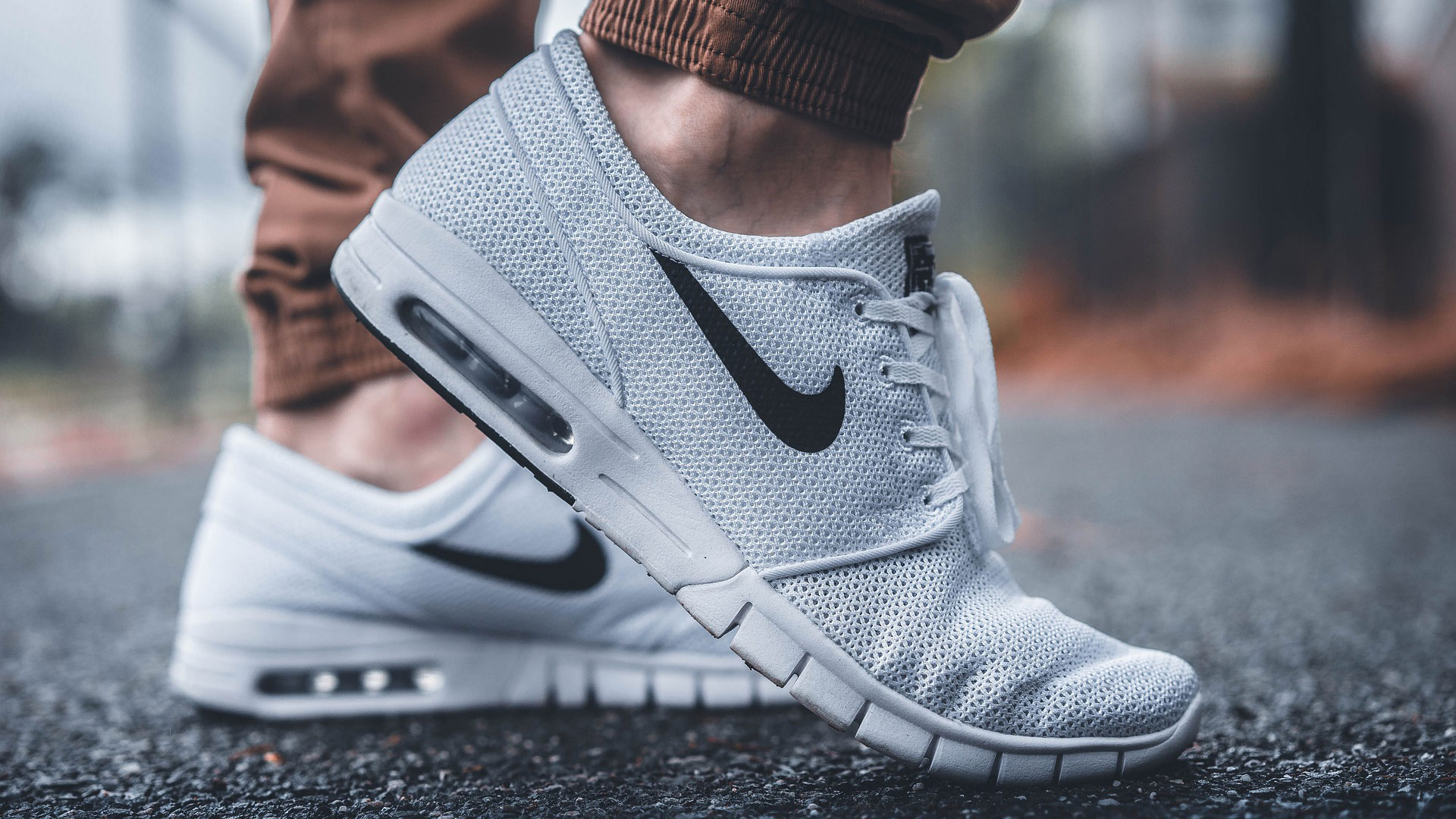
The Nike swoosh cost $35 to design. It took fifty years of consistent branding to make it worth billions. Most businesses focus on the logo and ignore everything that made it mean something. This guide breaks down the Nike branding strategy, what actually sits behind the swoosh, and the lessons UK small businesses can apply to build a brand people genuinely remember.
Phil Knight started Nike with a $50 loan and a belief that American runners deserved better shoes. Nobody handed him a brand. He built one decision at a time over fifty years. That is the part of the story most people skip.
The Nike branding strategy is studied in business schools and referenced in boardrooms across the world. Yet the lessons it contains are consistently misread. Most people see the swoosh and think logo. What they should see is the result of a purpose applied consistently across every product, campaign, and partnership Nike has ever made.
This guide examines what the Nike branding strategy actually consists of, why it has produced one of the most valuable brands in human history, and what UK small businesses can take from it today.

Why the Nike Branding Strategy Is About Far More Than a Logo
When most people think about the Nike branding strategy they think about the swoosh. That is understandable. The swoosh is one of the most recognised marks in human history. However, reducing Nike’s success to a logo is like attributing a winning football team’s record entirely to their kit.
According to Rival IQ, Nike’s branding strategy is built around pitching a lifestyle rather than a product. Every campaign, every endorsement, and every piece of content contributes to one coherent message about who Nike serves and what it believes.
The Nike branding strategy is built on five interlocking pillars:
- A clear brand purpose centred on human potential
- Simplicity in every visual and verbal decision
- Emotional storytelling that speaks to aspiration not product features
- Ruthless consistency across every touchpoint and market
- Symbolic meaning built through decades of deliberate association
None of these pillars require a global budget to adopt. They require clarity of thinking and the discipline to apply that thinking consistently over time.
The swoosh is famous because of what it represents. What it represents was built deliberately, strategically, and over a very long time.
The Power of Simplicity in the Nike Branding Strategy
In 1995 Nike made one of the most confident branding decisions in corporate history. It dropped its own name from its logo entirely and began using the swoosh alone. No wordmark. No descriptor. Just a curved line that by then needed no explanation.
That decision was only possible because Nike had spent over two decades applying one of the most important principles in branding: simplicity. The swoosh is a single fluid curve. No gradients, no shadows, no complexity. A design so clean it works at any size on any surface.
Simplicity in branding is not about doing less. It is about removing everything that dilutes the core message until only the essential remains. Nike’s tagline is three words. Its logo is one shape. Its core belief is one idea.
Read our guide on iconic brands to understand how simplicity sits at the heart of every brand that achieves lasting recognition.
How Nike Built Emotional Connection Into Every Campaign
Nike’s advertising almost never talks about its products. Watch any major Nike campaign from the past four decades and you will find stories of perseverance, identity, and human potential. The shoes appear but they are never the subject. Research from the Harvard Business Review shows that emotionally connected customers are more than twice as valuable as highly satisfied ones. Nike built its entire business model around creating that connection at scale.
Tell Stories About People Not Products
Nike campaigns feature athletes overcoming obstacles and ordinary people pushing their limits. The product is present. The person is always the story.
Speak to Identity Not Need
Nobody needs a pair of trainers. They want to feel like the kind of person who runs and pushes harder. Nike’s messaging sells who you become rather than what you buy.
Use Real Emotion Not Manufactured Sentiment
The best Nike campaigns are uncomfortable and honest. The 1988 Walt Stack ad featured an 80-year-old man running across the Golden Gate Bridge. That specificity is what made it unforgettable.
Associate With Values Your Audience Already Holds
Nike reflects values its audience already holds back at them and positions the brand as an expression of those values. That is far more powerful than persuasion.
Stay Consistent With the Emotional Territory
Nike has occupied the emotional territory of empowerment and human potential for over fifty years. Each campaign adds to a body of work that compounds significantly over time.
The Branding Strategy Lesson Most Businesses Miss
The swoosh has not fundamentally changed since 1971. Just Do It has not changed since 1988. Nike’s core colour palette has remained constant across decades of campaigns and product lines.
This is not laziness. It is one of the most strategically important decisions Nike has ever made. Consistency is the mechanism through which recognition is built. Every time a customer sees the same mark or feels the same emotion from a brand the association deepens.
For UK small businesses, inconsistency is endemic. Different tones of voice on different platforms. Brand colours that shift between campaigns. Each inconsistency costs a fraction of the trust that consistent brands build over the same period.
Read our guide on rebranding to understand how to evolve a brand identity without sacrificing the consistency that makes it work.

Why the Swoosh Stands for Something Bigger
A symbol only has meaning when enough people agree on what it means. Nike did not design meaning into the swoosh. It built meaning around it through fifty years of deliberate association with athletes, achievement, and human potential.
In fiscal 2025, Nike reported $46.3 billion in revenue according to Nike Investor Relations. A significant portion of that commercial power is attributable to the symbolic weight the brand has accumulated over decades.
People pay more for Nike not because the shoes are objectively better than every competitor. They pay more because of what wearing Nike means. That meaning was built deliberately through consistent association over a very long time.
For UK small businesses the lesson is specific. Choose what you want your brand to stand for and then consistently associate your brand with that meaning through every decision you make.
What the Nike Branding Strategy Teaches UK Small Businesses
The Nike branding strategy is often dismissed by UK small business owners as something that only works with a billion pound marketing budget. That misunderstands where Nike’s brand strength actually comes from.
The principles that built Nike’s brand are available to any business regardless of size. What they require is not money. They require clarity, consistency, and the patience to let brand work compound over time.
The most applicable lessons for UK small businesses include:
- Define your brand purpose in one sentence and apply it to every decision
- Strip your visual identity back to its most essential elements
- Build campaigns around your customer’s story rather than your product’s features
- Choose two or three values and demonstrate them through action not copy
- Stay consistent long enough to let recognition develop before changing direction
None of these actions are expensive. All of them are difficult because they require saying no to distraction and trusting that the work is building something real.
Read our guide on business growth strategies to understand how strong brand foundations integrate with the wider decisions that drive sustainable business growth in the UK.
How Nike Evolves Without Losing Its Identity
Nike has launched hundreds of products, entered dozens of new markets, and survived multiple existential business challenges since 1971. Through all of it the core identity has remained intact. That is not accidental. It is the result of a disciplined understanding of what can change and what cannot.
What Nike changes regularly is the creative expression of its brand. Campaigns shift. Products evolve. Digital platforms come and go. Nike adapts to all of it because the creative expression is meant to stay current and culturally relevant.
What Nike never changes is the underlying meaning. Empowerment. Human potential. The belief that anyone with a body is an athlete. These ideas have survived recessions, cultural shifts, and multiple leadership transitions.
For UK small businesses the principle is the same. Your logo can be refreshed. Your purpose, your values, and the feeling you create in customers should remain the constant around which everything else orbits.

The Swoosh Did Not Build Nike. Nike Built the Swoosh
Most UK businesses are waiting until they have more budget, more clients, or more time before they take their brand seriously. Nike started with $50 and a handshake. The brand came from what they did consistently every day after that.
The Nike branding strategy is a lesson in discipline rather than resources. Purpose, simplicity, emotional connection, and consistency applied over time create something no single campaign can buy. These principles are as available to a UK small business in 2026 as they were to Phil Knight in 1971.
Start with purpose. Apply it consistently. Build from there and do not stop.
Frequently Asked Questions About Nike Branding Strategy
At its core, the Nike branding strategy is built on a clear purpose, emotional storytelling, visual simplicity, and decades of consistent application. Together, these elements have turned a curved line into one of the most valuable symbols in the world.
Rather than advertising products, Nike consistently told stories about human potential and personal achievement. As a result, customers associate the brand with how they want to feel about themselves rather than what they want to buy.
Absolutely. The core principles of Nike’s strategy require clarity and consistency rather than budget. In fact, small businesses have an advantage because they can be more genuinely human in every customer interaction than a global corporation can.
Because consistency is one of the most valuable things a brand can offer. Furthermore, changing a recognised mark resets the recognition that has been built and forces a brand to start again from a lower baseline of familiarity.