


Most entrepreneurs spend years copying habits that look good on social media but produce nothing in real life. The 5am wake up. The cold shower. The hourly routine. None of it matters without the right foundations. This guide looks at the entrepreneur success habits high performers actually live by and why they work when everything else fails.
Most advice about entrepreneur success habits starts in the wrong place. It points to Tim Cook’s 4:30am alarm, Elon Musk’s 120-hour weeks, and cold showers at dawn. It sells the aesthetic of success rather than the substance of it.
High performers do not succeed because of when they wake up. They succeed because of what they consistently do with their attention, energy, and decisions over long periods of time.
This guide looks at the entrepreneur success habits that actually separate high performers from everyone else. Not the ones that photograph well. The ones that build businesses, protect health, and create results that last beyond the initial burst of motivation.
Why Most Entrepreneur Success Habits Advice Gets It Wrong
The entrepreneur success habits industry is built on a compelling lie. Wake up early enough, follow the right morning ritual, and success will follow. Millions of business owners have bought into this narrative and burned out trying to live someone else’s routine.
The truth is more complicated. According to Science Alert, waking up at 5am can actually undermine productivity for people whose biology is not wired for early rising. Forcing an early start against your natural chronotype leads to sleep deprivation, poor decision making, and reduced output. The very opposite of what success requires.
The habits that get talked about most are the ones that look impressive in interviews and on social media. They are not always the ones driving results behind the scenes. The common mistakes entrepreneurs make when building habits include:
- Copying routines that work for someone else’s biology and schedule
- Prioritising consistency in the wrong areas
- Confusing discipline with deprivation
- Building habits around optics rather than outcomes
- Abandoning habits after two weeks because results are not immediate
High performers build habits around their own nature, not someone else’s highlight reel. That is the starting point that most advice skips entirely.
The most effective entrepreneur success habits are boring, personal, and invisible. They do not make good content. They do make successful businesses.

The Morning Routine Myth and What Actually Sets the Tone
The morning routine has become entrepreneurial mythology. Books, podcasts, and social media accounts are devoted entirely to what successful people do before 8am. Most of it is performance rather than principle.
What actually sets the tone for a productive day is not the time on the clock. It is the quality of intention behind the first hour. An entrepreneur who wakes at 7am with a clear plan for the day will outperform one who wakes at 5am and spends two hours scrolling and reacting.
The habits that consistently set a strong tone for the working day are straightforward. Review your priorities before you open your phone. Avoid email for the first hour. Do one piece of meaningful work before the demands of others begin. These are not glamorous. They are effective.
The real question is not what time you start. It is whether you start with intention or with reaction. Most entrepreneurs start in reaction mode. They open their inbox, respond to whoever shouted loudest overnight, and spend the rest of the day catching up rather than leading.
Read our guide on time management to understand how to structure your working day around outcomes rather than demands.
Entrepreneur Success Habits Built Around Energy Not Time
Time is fixed. Energy is manageable. This is the distinction most entrepreneur success habits advice misses entirely and it is the one that matters most.
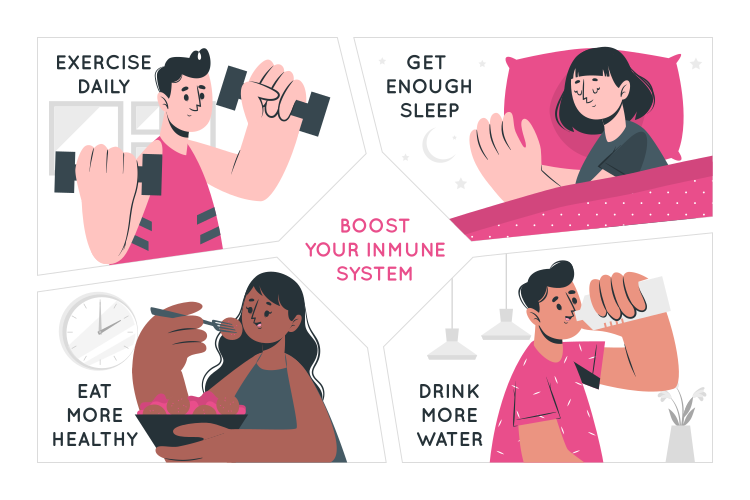
You have the same 24 hours as every other business owner. What separates high performers is not how many of those hours they work. It is how much energy they bring to the hours that count. The NHS is clear that adults need seven to nine hours of quality sleep per night for optimal cognitive function. Entrepreneurs who consistently sleep less than this impair their decision making, creativity, and emotional regulation without realising it.
Protect Your Peak Hours
Every entrepreneur has two to three hours each day when their thinking is sharpest. Identify yours and protect them for your highest value work. Do not waste peak energy on email, admin, or meetings.
Treat Sleep as a Performance Tool
Sleep is not laziness. It is the foundation of every other habit on this list. Poor sleep makes everything harder. Good sleep makes everything possible. Schedule it, protect it, and stop treating it as negotiable.
Move Your Body Every Day
Physical movement directly improves cognitive performance. It does not need to be an hour in the gym. A 20 minute walk, a short run, or a brief strength session changes the quality of your thinking for hours afterwards.
Eat to Think Not Just to Function
What you eat at 12pm affects how well you think at 3pm. Entrepreneurs who eat for energy rather than convenience make better decisions in the afternoon when most business critical thinking happens.
Build Recovery Into Your Week Deliberately
High performers do not work seven days a week indefinitely. They build deliberate recovery into their schedule because they understand that rest is not the opposite of productivity. It is the source of it.
How High Performers Make Decisions Faster and Better
Decision fatigue is one of the most underestimated threats to entrepreneurial performance. Every decision you make draws from the same finite pool of mental energy. By afternoon, most entrepreneurs are making worse decisions than they were in the morning without knowing it.
High performers solve this problem by reducing the number of decisions they need to make, not by trying harder to make better ones.
Systematise Routine Decisions
Anything that can be decided once and followed automatically should be. What you eat for breakfast, when you check email, how you structure your meetings. Every routine decision you systematise frees up mental bandwidth for the decisions that actually matter.
Set Decision Criteria in Advance
Before a decision needs to be made, define what a good outcome looks like. High performers use pre-set criteria to evaluate options quickly rather than deliberating from scratch each time.
Make Fewer Bigger Decisions
Spreading attention across dozens of small decisions is cognitively expensive. Consolidate where possible. Batch similar decisions together and make them in a single session rather than scattered throughout the day.
Act on 70% Information
Waiting for perfect information before making a decision is a habit that slows businesses and stalls growth. High performers make confident decisions with sufficient rather than complete information and adjust as they go.
Learn From Decisions Systematically
A weekly review of recent decisions, what worked, what did not, and why, builds decision making skill over time. Most entrepreneurs make the same mistakes repeatedly because they never examine the pattern.
Read our guide on building your team to understand how strong leadership structures reduce the decision making burden on the entrepreneur.
Entrepreneur Success Habits That Keep High Performers Learning
Warren Buffett spends 80% of his working day reading. Bill Gates reads 50 books a year. These are not coincidences. The most successful entrepreneurs in the world treat learning as a primary business activity, not a luxury they fit in when time allows.
The Harvard Business Review identifies reflective thinking as one of the most consistent habits of high performers. They do not just consume information. They process it, question it, and connect it to what they already know.
The entrepreneur success habits that keep high performers ahead of the market include:
- Reading widely across their industry and beyond it
- Seeking out mentors who have solved problems they have not yet faced
- Attending events where they are the least experienced person in the room
- Reviewing their own performance weekly without defensiveness
- Asking better questions rather than seeking faster answers
Learning is not passive for high performers. It is structured, intentional, and tied directly to their business challenges. They do not read randomly. They read to solve specific problems and build specific capabilities.
The entrepreneurs who fall behind are rarely the ones who work less hard. They are the ones who stop learning and assume that what got them here will get them to the next level. It will not.
Entrepreneur Success Habits That Protect Mental Resilience
Entrepreneurship is a long game. The habits that protect your ability to keep going when things get hard are not discussed enough. Mental resilience is not a personality trait. It is a skill built through deliberate habits practised consistently over time.
Most UK entrepreneurs push through difficulty by working harder and resting less. This approach works in the short term and breaks down over years. The entrepreneurs who last and continue to perform are the ones who build resilience into their daily habits before they need it.
The entrepreneur success habits that protect mental resilience include:
- Keeping a short daily journal to process thoughts and reduce mental clutter
- Building a small circle of fellow entrepreneurs who understand the pressures you face
- Separating business performance from personal worth
- Taking full days away from work regularly rather than half-days that never fully switch off
- Acknowledging what is working as deliberately as you analyse what is not
Resilience is also built through the quality of the business itself. A business with clear systems, a capable team, and a sustainable model places less constant pressure on the founder. Read our guide on business growth strategies to understand how building the right foundations reduces the mental load on the entrepreneur.
Why the Best Entrepreneurs Master the Art of Saying No
Every commitment you say yes to is a no to something else. High performers understand this deeply and guard their attention accordingly. The ability to say no clearly and without guilt is one of the most powerful and least discussed entrepreneur success habits there is.
Most entrepreneurs struggle with saying no for three reasons. Missing an opportunity feels like a permanent loss. Being helpful feels like good leadership. Without a clear enough definition of what they are building and why, every request feels worth considering. All three are solvable.
The habits that make saying no easier and more natural include:
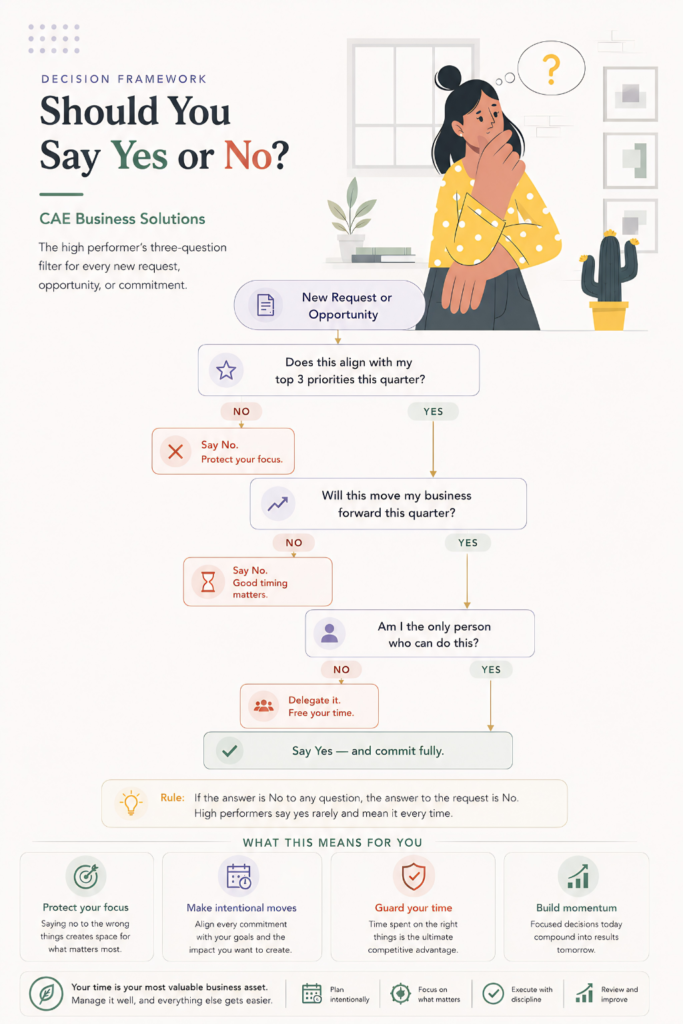
- Defining your top three priorities for the quarter and measuring every new opportunity against them
- Creating a standard response for requests that do not fit your current focus
- Accepting that saying no to the wrong things is saying yes to the right ones
- Recognising that your time and attention are the scarcest resources in your business
- Reviewing your commitments monthly and removing ones that no longer serve your goals
Every entrepreneur who has scaled a successful business will tell you that the decisions that mattered most were not what they said yes to. They were what they said no to. Focus is not a strategy. For high performers it is the strategy.

Your Next Move Decides Everything
Most entrepreneurs will read this and recognise habits they know they should build and have not yet built. That recognition without action is where good intentions go to die.
The entrepreneur success habits in this guide do not require a personality change or a complete overhaul of your life. They require one decision made consistently over time until it becomes the way you operate.
Pick one habit from this guide. Practise it daily for thirty days before adding another. Build slowly and build permanently. The entrepreneurs who win are not the ones who change everything at once. They are the ones who change one thing and never go back.
Frequently Asked Questions About Entrepreneur Success Habits
No. Waking up early works for some entrepreneurs and actively harms others. The habit that matters is starting your day with intention regardless of the time on the clock.
Research suggests between 21 and 66 days depending on the complexity of the habit and the individual. Consistency matters more than speed.
Managing your energy rather than your time. Every other habit on this list depends on showing up with enough mental and physical capacity to do your best work.
By building recovery into their schedule deliberately rather than waiting until they collapse. Rest is not a reward for hard work. It is a requirement for sustained performance.
They are entirely learned. High performers are not born with better habits. They build them through deliberate practice and honest self-assessment over time.